

The Jews rescued from Gęsiówka, though often unarmed, became indispensable sewer guides during the Warsaw Uprising. In the darkness of the underground, they saved the lives of hundreds of insurgents, guiding them through the deadly maze of Warsaw's sewers.
On August 5, 1944, before noon, a lone German Panzerkampfwagen V "Panther" tank appeared on Gęsia Street, the main gate of the KL Warschau concentration camp, commonly known to Warsaw residents as Gęsiówka. Initially greeted with joy by the German guards, the Panther unexpectedly opened fire, destroying Gęsiówka's guard towers and the machine gun nests on them one by one, before ramming the entrance gate with a bang. Behind it, insurgents wearing red and white armbands burst into the camp. After a short, uneven fight, the German defenders fled, and a jubilant, multilingual crowd of prisoners in blue and white stripes poured out onto the camp square. Gęsiówka was liberated, and with it – Jews from Poland, Hungary, Greece, Belgium, France, Germany, and Austria. 324 men and 24 women. Their liberators were insurgents from the "Radosław" group, soldiers of the elite "Zośka" Scout Battalion, who three days earlier had captured two German tanks and used one of them in a surprise attack on the camp.
The tank commander, Corporal Wacław Micuta "Wacek," seeking a moment of peace after the fighting, unexpectedly stumbled upon a double line of prisoners in striped uniforms lined up in an empty square. One of them introduced himself as Officer Cadet Henryk Lederman and reported that the Jewish battalion was ready for combat. "Wacek" immediately took the news to the group's commander, Lieutenant Colonel Jan Mazurkiewicz "Radosław." Initially skeptical, he was convinced that the Jews eager to fight could be accepted into the units of his group. Due to a shortage of weapons, most of them joined the technical services. Thus, "Zośka's" armored platoon, formed just a few days earlier, became, according to "Wacek," the only organized Jewish unit in the Home Army (though the command did not share his opinion). In addition to the aforementioned Henryk Lederman, its members included, among others: Dawid Goldman "Gutek," Józef Filar "Filar," Ryszard Sutka "Rysiek," Stanisław Siemiński "Koper," Abram Zylbersztejn "Szaber," and those known only by their pseudonyms "Kuba," "Koleman," and "Tibor." Another Jew freed from Gęsiówka, Henryk Poznański "Bystry," was assigned to the "Parasol" Scout Battalion.
After heavy fighting, the armored platoon, already on August 11th, was armored in name only – both tanks were burned to prevent them from falling back into German hands. The "Radosław" group, forced out of Wola, moved to the Old Town, while the ZOśka armored men were assigned a new role: as canal guides.

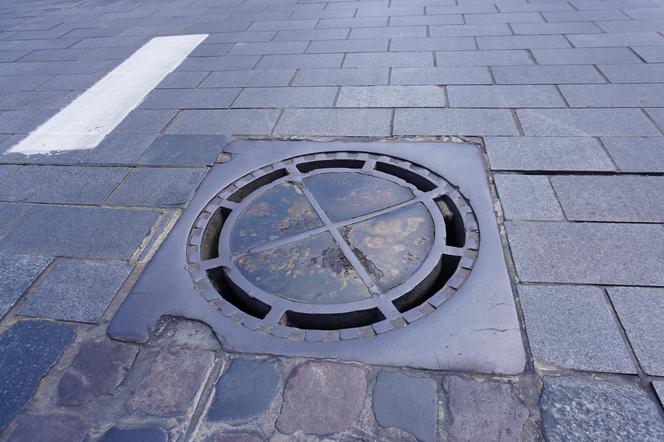
Warsaw's sewers, built by William Heerling Lindley in the late 19th century, were not used as communication routes during the initial period of the uprising. However, as the situation of the insurgents gradually worsened and more and more districts lost their
Interconnections above ground, the need arose to create permanent routes running beneath the German-occupied areas of Warsaw, connecting the Old Town with Śródmieście and Żoliborz, Mokotów with Śródmieście and Powiśle, and Ochota with Śródmieście. This led to the formation of the "Północ" Group of guides and canal liaisons, in which Jews played a prominent role. The latter felt at home in the underground corridors, unerringly recognizing which street they were under at any given moment, and also provided loving care to the insurgents they led.
How did those released from Gęsiówka acquire such excellent knowledge of the sewers? They themselves didn't reveal it, but their colleagues from the units maintained that "Heniek," "Bystry," and "Gutek" had fought in the Warsaw Ghetto Uprising, and it was during this time that they mastered underground navigation. Whatever the truth, thanks to their skills, hundreds of people were saved. They also shared their knowledge with others, training their successors. Among them were Kazimierz Sheybal "Antek" and Kazimierz Weiss "Biały."
Navigating the sewers was a traumatic experience in every respect – in claustrophobically cramped tunnels, in complete darkness, illuminated only by the flickering candles carried by guides, travelers waded through filth, stumbling over the corpses of their predecessors and their abandoned cargo. They lacked fresh air and space, and were constantly in danger. The Germans dammed the water and built barriers along the routes, threw grenades, smoke candles, and poisonous substances into the sewers, and eventually began using the experimental "Typhoon" system, which caused powerful explosions that killed or maimed anyone in the sewer. Traveling in large groups was always at risk of collective panic, during which people trampled each other in the darkness. Some lost their minds and attacked their companions, others took their own lives. Those who lost their way faced a lonely death in the darkness or were shot by the Germans. Especially for the wounded and sick, passing through the sewers was a near-death experience. Everyone who ever went underground during the uprising recalled it as one of the most difficult. No one was eager to do so.
repeat them. No one except the guides.
Guides not only had to be perfectly aware of the sewer layout, they also had to have nerves of steel. "Heniek" taught his subordinates that it was best to ignore the rats crawling in the sewers, because then they wouldn't attack. One insurgent recalled how "Bystry" was crushed under a pile of beams after a building was hit directly by a German shell. Immobilized, he lay quietly, smoking a cigarette, waiting to be released or die. "Whatever will be, will be," he would say.
The canal guides didn't wear high boots – instead, they wore lightweight shoes that wouldn't chafe their feet. Instead of socks, they wore more practical foot wraps in the canals. Hygiene was a top priority among the so-called canal "raiders" – guides and canal handlers always had priority in the wash queue. Thanks to the help of employees of the Municipal Sewerage Company, the canal department even had a private, top-secret entrance to the canals on Franciszkańska Street.
It is unknown whether "Heniek" or "Bystry" actually fought in the Ghetto Uprising, and if so, under which organization's banner. Surviving fighters from both the Jewish Combat Organization and the Jewish Military Union participated in the Warsaw Uprising. Among the latter was Jakub Smakowski "Czarny Julek," who was also involved in guiding activities. Besides the Jews from the armored platoon, former ŻOB soldiers fighting on the side of the People's Army, Szymon "Kazik" Ratajzer and Icchak "Antek" Cukierman, also dabbled in the sewers.
The sewer guides weren't just about guiding people—their duties also included identifying and marking underground routes, transporting weapons and ammunition, carrying reports and supplies, and even fresh fruit and vegetables, much needed by the insurgent hospitals. Sometimes they had to fight—skirmishes with the Germans in the sewers were rare, however, as the latter were wary of going underground. They also conducted reconnaissance before operations—the unsuccessful sewer landing on Pawiak and the unsuccessful attack on Bankowy Square. When the fighting moved to Czerniaków, "Gutek" and his colleagues were tasked with marking the sewer evacuation route to Mokotów.
The actions of the "special unit" were directed by the deputy commander of the armored platoon – Lieutenant Eugeniusz Romański "Rawicz".
The evacuation of the Old Town proved a test of the "sewer men's" guiding skills – within a few days, nearly 5 insurgents passed through the sewers to Śródmieście and Żoliborz, right under the Germans' noses. At the end of August, the most experienced of the guides, "Bystry," led the Home Army Headquarters, led by General Tadeusz Komorowski "Bór," through the sewers to Śródmieście, followed by the command and soldiers of the "Północ" group, and after them the rearguard of the "Parasol" scout battalion. Stanisław Wicherkiewicz "Zawieja," among the dozen or so "Parasol" soldiers securing the sewer hatch on Krasiński Square, recalled that "Bystry" came for them at the last minute, when the surrounding houses were burning and the Germans were closing in. Poznański would even return for a few people if there was a chance of saving them – as happened with Wanda Wojnicz "Nitka." He was widely remembered as a kind and well-liked man, and his in-depth knowledge of the sewers was admired – he knew which manholes the Germans were lurking at, where to be careful, and he taught his charges how to navigate the sewers and how to avoid dangers.
In the last days of August, "Gutek" led a landing of a group from the "Czata 49" battalion through the sewers to Bankowy Square as part of an unsuccessful attempt to break through the insurgent units from
Old Town. At the end of September, as Czerniaków fell to German pressure, he led the remnants of the "Radosław" and "Kryska" groups through the sewers to Mokotów.
Among the most experienced guides were "Filar" and "Kuba." The team also included a few female liaisons, including Anna Wyganowska "Ania" and Jadwiga Jakubowska "Kubuś." The latter usually operated in the company of "Gutek."
The armored platoon remained in the uprising until the end. During the fighting in Mokotów, "Wacek," who was in a field hospital, was offered evacuation through the sewers to Śródmieście by his Jewish comrades, but he chose to leave the city with the civilian population. After being separated from the column leaving Warsaw, he made his way to Podkowa Leśna, where he survived the war. Earlier, Lieutenant "Rawicz" had also refused evacuation, dying along with Officer Cadet Weiss "Biały" in Czerniaków.
Most Jewish canal guides did not live to see the Uprising's capitulation. "Heniek" was killed on September 5th (according to other sources, September 13th) in Powiśle, while "Filar" and "Kuba" were killed on September 13th in Czerniaków. Three days later, also in Czerniaków, "Bystry" was killed while exiting a canal hatch. "Gutek" was killed in Powiśle on October 2nd while attempting to cross the Vistula. "Czarny Julek" lived to see the end of the war, hiding with a group of Warsaw Robinsons until January 1945. "Koper" and "Szaber," the last Jews from the armored platoon, left Warsaw with the capitulating insurgents.
On the monument to the fallen members of the armored platoon at the Powązki Military Cemetery in Warsaw, we find the names and nicknames of its Jewish members: rifleman Dawid Goldman "Gutek", officer cadet Henryk Lederman "Heniek", as well as the nicknames of corporals "Filar", "Kuba" and "Rysiek".
"Heniek", "Bystry", "Filar", "Kuba" and "Rysiek" were awarded the Crosses of Valor.
The Jewish canal guides did not receive a permanent commemoration, but their memory lives on in the memories of their comrades from the insurgent units.
Bibliography:
Górecki R., Account of the Oral History Archive of the Warsaw Uprising Museum.
Okońska A., Account in the Oral History Archive of the Warsaw Uprising Museum.
Wicherkiewicz S., Account in the Oral History Archive of the Warsaw Uprising Museum.
Bączyk N., Jasiński G., "David versus Goliath. German special warfare means in the Warsaw Uprising" Warsaw 2020.
Kamiński A. "Zośka and the Parasol", Warsaw 2023.
Engelking B., Libionka D. "Jews in the Warsaw Uprising", Warsaw 2009.
Sas R., Account in the Oral History Archive of the Warsaw Uprising Museum.
Stachiewicz P., "Umbrella. The history of the special task unit of the Subversion Directorate of the Home Army Headquarters, Warsaw 1981.
Wyganowska-Eriksson A. "Armored platoon of the "Zośka" Battalion in the Warsaw Uprising", Gdańsk 2010.
Bukalska P., "Thinking about the Smart One", Tygodnik Powszechny 17/2006.
