

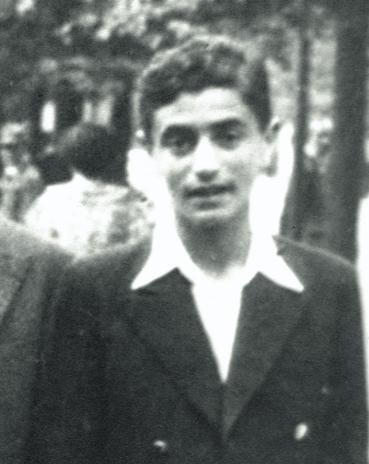
Israel Channel | Public Domain
Initially, collecting weapons was very slow – the conspirators had poor contacts with the Polish underground or with black market arms dealers. Furthermore, on September 3, 1942, a setback occurred when ŻOB liaison Regina Justman was captured by the Germans while carrying several pistols from one hideout to another. This was a significant blow to the fledgling organization. As late as January 1943, Jewish conspirators possessed very few weapons, limited to a dozen or so pistols and grenades. Only after the partial success of the January Self-Defense Operation of January 18-22, 1943, did the acquisition of weapons accelerate significantly. Weapons found their way into the hands of Jewish conspirators through four channels. Both the Jewish Combat Organization and the Jewish Military Union managed to purchase larger quantities of pistols on the black market, and ŻOB also received several dozen (most likely 60 or 70) as gifts from the Home Army. Furthermore, both organizations captured a small number of weapons from the enemy, disarming Germans and Polish policemen known as the Blue Men in the ghetto. In addition, both organizations engaged in clandestine production of projectile weapons.

Photograph by Miriam Justman, Paulina Włodawer, and Regina Justman | POLIN Museum of the History of Polish Jews
Wojciech Rodak wrote extensively about the smuggling of weapons into the ghetto [interested readers are referred to his text ] , so only an outline of the operation will be presented here. The Jewish Military Union purchased a large portion of its arsenal from Cezary Ketling-Szemley, commander of a small underground organization (the Polish People's Independence Action), who, thanks to his contacts in the underground, managed to deliver several thousand rounds of ammunition and a number of firearms—including, perhaps, rifles—to the ghetto. Furthermore, the ŻZW sought contacts with other arms dealers, likely exploiting the underworld connections of some of the organization's members. In turn, the ŻOB, to supplement the gifts from the Home Army, sent several liaisons outside the ghetto to purchase weapons and transfer them at predetermined times. A key role in these purchases was played by Arie Wilner, codename "Jurek," the ŻOB's representative outside the ghetto, along with liaisons such as Władka Meed and Tuwia Szejngut.
At the same time, clandestine production of simple weapons – incendiary bottles and grenades – was underway in the ghetto. Engineer Michał Klepfisz was responsible for this production in the ŻOB, having been instructed by a member of the Polish underground, a certain "Julian." This is likely how Major Zbigniew Lewandowski, nom de guerre "Szyna," then head of the Home Army Technical Research Office, introduced himself, years later telling Hanna Krall: "Molotov cocktails? – There's no comparison. Our bottles were sophisticated, delicate […] they had ignition points all around the circumference. […] The latest achievement of the Home Army Technical Research Office." Two figures can attest to the scale of production. According to Marek Edelman, in addition to shedite (a popular explosive used in clandestine armories), approximately two thousand liters of gasoline for incendiary bottles were smuggled into the ghetto. Many years after the war, in the area of the intersection of al. Marchlewski (now John Paul II) and Miła Streets, a deposit was discovered containing, according to press reports, up to 100 glass ampoules filled with a mixture that ignited when broken, which were used as detonators. Władka Meed visited one of the clandestine incendiary bottle factories. She described a room where "two young men were busy working. One was leaning over a large barrel, slowly stirring its contents. The other was carefully scooping the mixed liquid and filling bottles with it [...] Neat rows of bottles stood against the wall. >. […] Grim determination was etched on the faces of the workers." Meanwhile, in the attic of the tenement house at 51 Nowolipie Street, a communist ŻOB unit was preparing grenades from light bulbs, into which an unknown explosive was poured. In total, enough grenades and bottles were produced to issue each ŻOB member a few at the beginning of the uprising. The ŻZW likely did not produce weapons on a large scale, as even the simple-to-produce incendiary bottles were purchased from Ketling-Szemley.
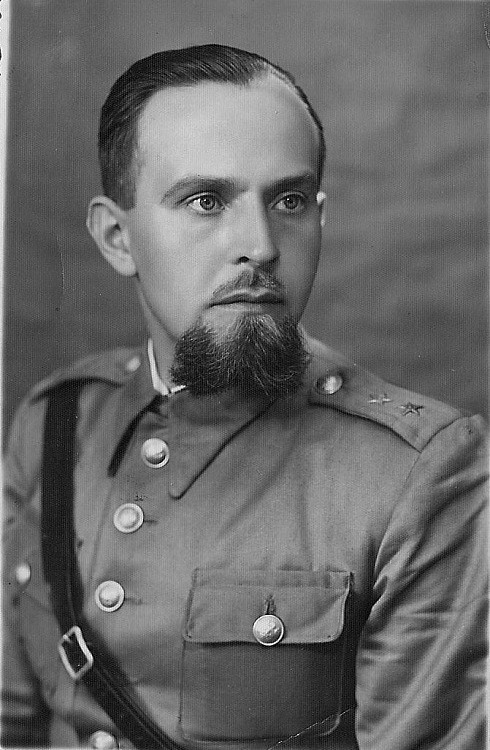
Cezary Ketling-Szemley | Warsaw Uprising Museum
Both the ŻOB and the ŻZW managed to capture small quantities of weapons from the enemy. These were significant acquisitions because the Jews were looting rifles at the time – much more difficult to smuggle into the ghetto and allowing for longer-range combat than handguns. On the first day of the January self-defense, January 18, 1943, the ŻOB group on Zamenhofa Street managed to kill, likely two Germans, and capture their weapons. The following day, one of its members, Zacharie Artsztajn, reportedly brought back an armful of captured weapons after another skirmish. Another rifle was captured by Mordechai Anielewicz, who, during a fight, wrested a gun from a German escorting a group of Jews to the Umschlagplatz and managed to escape from the battlefield. In total, the ŻOB captured a dozen or so firearms during the January self-defense. In the following weeks, both the ŻZW and the ŻOB captured several more weapons by disarming policemen and members of the industrial guard – the Werkschutz – in the ghetto.
When German troops entered the Warsaw Ghetto around 6 a.m. on April 19, 1943, they encountered resistance from several hundred members of the ŻOB and ŻZW. Cywia Lubetkin, one of the ŻOB's founders, recalled after the war: "How much has changed since we first fired in January! Back then […] we stood alone, a small group of people, against German battalions. […] All our weapons at that time were hand grenades and a few revolvers. And now hundreds of fighters, in fortified positions, ready for mortal combat with the enemy." She quickly supplemented this optimistic picture: "We also had very few weapons now." In practice, by the outbreak of the uprising, the Jewish underground had managed to acquire several hundred pistols, several thousand grenades and incendiary bottles, and a small number of long guns, which allowed most of the fighters to be armed with pistols and a few grenades or incendiary bottles. The ŻOB's arsenal included a total of about 10 repeating rifles and probably one submachine gun. Probably a few days before the ŻZW was established, he managed to buy 2-3 machine guns, and before that – an unknown number of repeating rifles.
The weakest point of the insurgents' armament was their ammunition supplies. Marek Edelman, commander of the ŻOB units in the area of the brush factory, reported that each pistol had an average of 10-15 rounds. This forced the insurgents to fight very carefully and to count every shot. Years later, Aron Karmi recounted how he distinguished who was shooting: "We could tell by the shots whether it was ours or the Germans – ours had pistols and grenades, while the Germans had heavy rifles." Even with careful management, ammunition supplies dwindled rapidly. After the first clash, many units had nothing to fight with. Describing the fighting on the first day of the uprising, Masza Glajtman-Putermilch said: "We retreated through attics because we had no more ammunition. I remember that! When we fired all the bullets from our pistols and threw all the grenades, we retreated." The ŻZW in the area of Plac Zamoyskiego was in a slightly better situation. Muranowski, as several thousand rounds obtained from Ketling-Szemley allowed for several days of fighting. On April 22nd, this reserve also ran out, prompting the ŻZW to decide to evacuate the main part of its forces from the ghetto.

Muranowski Square | collections of the Warsaw Ghetto Museum

Masza Glajtman – Putermilch 1946 | Ghetto Fighters' House
Szmuel Krakowski, a Polish Army officer and later long-time director of the Yad Vashem Institute, estimated that "the Nazis' superiority over the insurgents in firearms and machine guns – excluding standard pistols, due to their limited usefulness in regular street fighting – was at least 27 to 1 on the first day of the uprising. However, the Nazis' firepower far exceeded this ratio. We must also take into account the ammunition levels of both sides." He presented this disproportion very graphically: "It is certain that for every heavy machine gun [MG] the Nazis had more ammunition than all the insurgent combat groups had in total, except for ammunition for standard pistols." This lack of ammunition forced the fighters to change their tactics. In a famous letter to Icchak Cukierman dated April 23, 1943, Mordechai Anielewicz reported: "Starting this evening, we have switched to guerrilla warfare"—meaning abandoning larger engagements in favor of nighttime ambushes against small German patrols. Anielewicz hoped this would seize weapons from the enemy. After several such actions, the Germans reinforced their patrols, making ambushes nearly impossible.

"Mechitsa. Individual and Collective Resistance of Women during the Holocaust" in the form of a banner, created as part of an artistic activity on the anniversary of the outbreak of the Warsaw Ghetto Uprising on April 19, 2020, with the images of: Niuta Tajtelbaum, Cywia Lubetkin, Tosia Altman, Regina Fuden, Gitta Kwonka, and Fela Talman - author: Hertzberg, Zuzanna | collection of the Warsaw Ghetto Museum
In the following days of the uprising, ammunition shortages became increasingly acute. Many underground members were still hiding underground, but they had nothing to fight with. Cywia Lubetkin described the atmosphere in the bunker at Miła 18, where at least several dozen ŻOB members were hiding: "The fighters lay on their bunks, covered in rags, despondent, lost in thought. Three weeks had passed since the beginning of the uprising. In reality, the fighting was over. There was no one left, and no means of fighting. The ammunition was almost completely depleted. […] We had the feeling that a slow death awaited us all." Under these conditions, it became clear that continuing the fight was impossible. After just a few days of the uprising, the main part of the ŻZW forces evacuated from the ghetto, followed later – on April 30th – by ŻOB fighters from the shop area, and on the night of May 8th–9th – by the surviving members of this organization from the so-called Central Ghetto. Only a few insurgents remained in the ruins, who were nicknamed the Rubble Fighters.
Bibliography:
- Lubetkin Cywia, The Holocaust and the Uprising, Warsaw 1999.
- Grupińska Anka, Continuously in a Circle, Wołowiec 2013.
- Mark Bernard, The Warsaw Ghetto Uprising, Warsaw 1963.
- Archives of Modern Records, Government Delegation for Poland, file reference 202/XV/2, Letter from Mordechai Anielewicz to Icchak Cukierman, April 23, 1943.
- Krall Hanna, To Keep Ahead of God, Warsaw 1997.
- Libionka Dariusz, Weinbaum Lawrence, Heroes, impostors, describers, Warsaw 2011.
- Edelman Marek, The Ghetto Fights (The Bund's Participation in the Defense of the Warsaw Ghetto), Warsaw 1945.
- Krakowski Stefan, The Relationship of Power in the Warsaw Ghetto Uprising, BŻIH No. 62/1967.
