

Jews – know this: deportation means Treblinka, and Treblinka means death. Do not rely on work cards. Hide children and the elderly. Young people, defend yourselves by all means. At least let us make it more difficult for the murderers to carry out their criminal activities; let us not fear being captured and shot. Better death by bullet than extermination in Treblinka – posters with such a message appeared in the Warsaw Ghetto in August 1942. This was the first act of resistance by the Jewish Combat Organization, established on July 28, 1942.
Young activists from left-wing Zionist organizations sought resistance and struggle. The first meeting, seeking any form of opposition to the German-initiated "Gross Action" in Warsaw, took place on July 22 or 23, immediately after the first deportations of Jews to the Treblinka extermination camp. Fifteen representatives of virtually every political persuasion in the ghetto participated, with the exception of Mizrachi (Orthodox Zionists) and Revisionist Zionists.
I didn't have much to offer. I suggested that those attending the meeting and their comrades, the social leaders, take to the streets with the slogan: "Treblinka is death!" Let the Germans come and kill us. I wanted Jews to see blood on the streets of Warsaw, not just in Treblinka ," recalled Icchak "Antek" Cukierman, one of the meeting participants representing the leftist Zionists of the Hechaluc-Dror movement.
| Cywia Lubetkin and Icchak Cukierman

Absolutely nothing could be ascertained about their fate.
Cukierman's appeal was more of a cry of despair, a cry for vengeance, embodying a desire to express any form of protest against what was happening on the streets of the Warsaw Ghetto. In August 1942, he was 27 years old. Three years in the underground, traumatic experiences in the closed Jewish quarter, helplessness in the face of the brutality of the Nazi oppressors. He had had enough. He and his organization fully realized that the so-called deportation from the ghetto simply meant the death of those deported. Thousands of people every day.
The day after the operation began, or perhaps even the first day, we already knew what Treblinka was and where it was located: the policemen at the Umschlagplatz saw the wagons returning from there after a few hours. From this, we could guess the distance from Warsaw. And yet: when the wagon doors were opened, they saw bloodstains and even corpses inside ," wrote "Antek" years later.
Additional inquiries among Polish railway workers revealed that the trains were heading to the vicinity of Treblinka, a village located approximately 100 kilometers from Warsaw. There was no doubt about it. The Haluce (members of Zionist youth organizations) were familiar with the "deportation" scheme from other locations. As early as April 1942, after the murder of most of the inhabitants of the Jewish ghetto in Lublin, the underground magazine "Nowe Tory," published by the Jewish party Poale Zion Right, published an account of these shocking events.
"New details are coming from Lublin about the ongoing "evacuation" of Jews. The German executioners are not limiting themselves to simply transporting the condemned, but are also murdering their victims in the streets, firing machine guns. Streams of blood (literally) flow through the city streets, and hundreds of unburied corpses lie in abandoned houses."
The same article also reported the deportation of one thousand Jews from Izbica to an "unknown destination," and in a subsequent transport, seven thousand. The author concluded that there was little doubt that all were sent to the Bełżec camp, where "they are murdered with poisonous gas." He noted with dismay the lack of information about those deported from the Lviv ghetto.
"The evacuation was to be carried out as planned, with 1000 people per day. However, in mid-March, two transports totaling 13500 people departed. Absolutely nothing has been determined about their destination or their fate. Their fate is of the utmost concern."
Information about Operation Reinhardt, which began in the spring of 1942, reached the Warsaw Ghetto through various channels. Not only through the underground press but also in private letters. The Ringelblum Archive preserves fragments of dramatic correspondence arriving in Warsaw from places such as Rohatyń, Werbkowice, Lublin, Ostrowiec, Opatów, Włodawa, Chełm, and Hrubieszów—from places where the murders were already underway.
Despite this, knowledge of the Holocaust in the ghetto was not widespread. Access to the underground press was limited. Yet another challenge was absorbing the knowledge that it was actually happening. As historian Lea Prais writes, accepting the fact of industrial-scale killing required a "cognitive revolution" for average people, given the "radically extraordinary" nature of this information. In the summer of 1942, few were capable of undergoing this kind of change of mind. Such were people like Cukierman, who had lost all illusions by that time. Nevertheless, his desperate call for some form of protest during the aforementioned meeting of Jewish groups was not understood.
Israel Gutman, one of the most important Israeli historians studying this period, claimed that after Cukierman's speech, two authorities spoke out. Both opposed military action: Zysia Frydman (Agudat Yisroel) and Dr. Ignacy Schipper, a historian and social activist.
"Frydman argued that resistance was pointless, that one should trust providence and wait for a favorable turn in the situation. Schipper, on the other hand, believed that one should draw conclusions from Jewish history; more than once the nation of Israel had been forced to reconcile itself to the shedding of its own blood to save the core of the nation and ensure the continuity of Jewish existence. Physical resistance was not a solution to the existing situation and could not only lead to a worsening tragedy but also hasten the end. The decisive statements of Frydman and Schipper made a strong impression on the other participants in the meeting and prevented any active resistance."
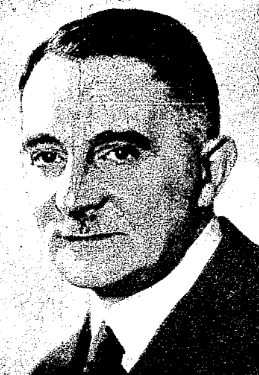
| Jehoszua Perle, illustration by Feliks Frydman; Ignacy Schiper

Terrible screams are heard for 5 minutes, then silence.
Meanwhile, new trains departed from Warsaw each day, crammed with people. On July 29, Abraham Lewin noted in his diary:
There are times when I am somewhat at peace with my life, and my state borders on indifference, but suddenly I am overcome by such fear of death that I am close to madness... Everything depends on the news that people bring from the street.
It seems that Cukierman was devastated after meeting with representatives of Jewish parties and organizations. The constant threat and information he received through his position took a daily toll on him.
I returned from the meeting knowing we were plummeting into the abyss, but at the same time, I knew there was a point beyond which we couldn't fall. I'd been plunging into the abyss for several months. I knew they would take us all, every last one. But I thought it would go on and on. We knew all the tricks. They couldn't deceive us any longer. We knew the end was inevitable. But I thought they would do it in stages, because that's what happened in Vilnius, too, but the operation went on and on, without a break.
More and more credible information reached the ghetto about what was happening in the camp near Treblinka. The circle of recipients of this news was still limited, but the "cognitive revolution" continued. On Friday, August 7th, Lewin wrote in his diary about the previous, shocking day in the ghetto – the deportation of Dr. Korczak with Stefa Wilczyńska and children from the orphanage; the two Rozencwajg sisters with their children, aged 18 and 2; the wives and children of factory workers from the Landau brothers' sawmill; Mrs. Waserowa, Mrs. Fintfalberowa, Mrs. Smolarowa with their child; Stupnicki; Rabbi Mendel Alter from Kalisz; Gurgis's mother; and the suicide of Samuel Hirszhorn, a renowned journalist, former member of parliament, and folk musician. The number of victims was already estimated at 15,000. It was on this day that Lewin also wrote for the first time: "The furnace in Małkinia and Sokołów" – referring to the activities of the Treblinka extermination camp. On August 11, he noted that Natan Smolar, a member of the Poale Zion Left and an associate of the Oneg Shabbat group, called Sokołów Podlaski (the headquarters of the Sokołów-Węgrów District Council, where the Treblinka II extermination camp was located). He heard over the phone that those being deported to Treblinka were going to their deaths. The first account from a Treblinka escapee, an unknown Jew named Salbe, also appears on the same date in the diary:
Fifteen kilometers from the Treblinka train station, the Germans take over the train. They brutally beat the people as they exit the wagons. Then they herd them into enormous barracks. Terrible screams can be heard for five minutes, then silence. The bodies they drag out are terribly swollen. It's impossible to wrap your arms around the bodies; their circumference has grown enormously due to the swelling. They select grave digger workers from among the victims, whom they also kill the next day. Terrible!"
Another Jew, Simche Lacki, escaped from Treblinka around the same time and gave his testimony after the war to a historical commission collecting testimonies from Jewish survivors in Germany. He arrived at the extermination camp at the end of July and escaped on the fourth day.
After about three days in the camp, only 17 of the 800 people selected for work remained […] On the fourth day, a train arrived with empty wagons. We loaded them with bundles of clothes and underwear. I decided to hide in one of the wagons. When I entered it with a batch of clothes, I hid in a pile of clothes. I heard them closing and sealing the wagons […] I took a risk and stuck my head out to get some fresh air. To my great surprise, I saw another head sticking out from among the clothes. We exchanged a few clothes. It was a boy from the village. One of them was my friend Mosz Boorstein. Everyone chose that one wagon because the window wasn't barred […] we traveled for several hours, not even knowing in which direction. We decided to jump off the moving train, because if we reached Lublin or Warsaw, they would catch us while unloading and shoot us.
Four escapees jumped from the train. Simche, walking along the tracks, met his friend Boorstein. Walking together along the tracks, they found the bodies of two of their companions who had died while jumping from the train car.
Also in August, the Bund decided to verify the information coming from Treblinka. According to Ruta Sakowska, one of the most prominent researchers at the Ringelblum Archive, the organization sent its best man, Zalman Frydrych, who, together with a Polish railwayman, traveled on a transport of deportees towards Małkinia. It was in Sokołów Podlaski that he learned the truth about the Treblinka camp.
| Closure of Treblinka station to passenger trains (1942)

We must start armed resistance with our own forces.
Meanwhile, activists from Hechalutz-Dror, Hashomer Hatzair, and Akiba (all organizations with a socialist-Zionist slant) decided to act on their own after an unsuccessful meeting with the rest of the Jewish organizations and established the Jewish Combat Organization (ŻOB) on July 28. The leadership included Icchak Cukierman, Cywia Lubetkin, Mordechai Tenenbaum (Hechalutz-Dror), as well as Józef Kapłan, Arie Wilner, and Szmul Brasław (Hashomer Hatzair).
We felt that our hesitation was over, all the doubts that had plagued us for so long had vanished. We knew we could no longer count on the help of social activists and leaders; we had to launch armed resistance on our own. Of course, the question of how to fight had to be resolved, how and with what. And we had only two revolvers! – this is how Cywia Lubetkin recalled the first ŻOB meeting at Dzielna 34 (where the Dror kibbutz was located).
They sprang into action. First, they began putting up posters calling on ghetto residents to defend themselves against deportation. Second, they began seeking contacts with underground organizations on the so-called Aryan side. For this purpose, Arie Wilner and Tosia Altman from Hashomer Hatzair, as well as Chawka Folman from Dror, were delegated beyond the wall. Mordechai Tenenbaum was sent to a farm in Czerniaków (run by Zionist organizations based on the principles of a pre-war kibbutz), where he was to organize self-defense (together with Laja Pereljsztajn). Third, they began setting fire to the property left behind by the deportees. These were sorted by "Wertersfassung" (Wertersfassung) brigades of forced Jewish laborers. The Jewish Fighting Organization (ŻOB) did not want the Nazis to leave behind valuables, books, or furniture. After all, all Jewish property was meticulously accounted for. Operation Reinhardt, as researchers today emphasize, had a clear financial aspect.
Finally, the most important action of those days arrived – the assassination of the universally hated Józef Szeryński, head of the Jewish Order Service (the official name of the Jewish police in the ghetto), who, according to the conspirators, was in charge of the deportation operation in the ghetto. The assassination was to be carried out by Izrael Kanał, a member of Akiba who had served in the Jewish police but left at the beginning of Gross Action.
The first armed action was to be the killing of a ghetto resident, and though it may seem strange, we could not have done otherwise. By assassinating the police commander, we wanted to condemn the shame of Jews being led to their deaths by Jews themselves. We knew that the only language that would speak to these scoundrels was the language of the gun, and if we wanted to achieve anything, we must first clear the air. Szeryński's assassination was intended to restrain his subordinates and frighten them, " Lubetkin wrote.
On August 21st, Kanał put on his police cap again, holstered his revolver, and went to carry out the sentence. He shot Szeryński once. He missed, the bullet grazing his cheek. When he tried to pull the trigger a second time, the gun jammed. Izrael managed to escape. The police chief survived the assassination attempt.
For this noble work, for murdering the entire Jewish community of Warsaw, a just hand (may it be blessed) put a bullet in his head. Unfortunately, the shooter's aim was so good that the bullet failed to put the vile baptism to rest. To this day, he has not died – this is how one of the most eminent pre-war Jewish writers, Jehosua Perle, who kept a diary of the Grossaktion from August 3, 1942, described these events.
The attack resonated widely in the ghetto, although it was widely believed that it was not Jews who were behind it, but a leftist Polish underground. Jewish resistance seemed virtually impossible, and the actions of the Jewish Combat Organization (ŻOB) were met with incomprehension. Posters about Treblinka were even viewed as a German provocation. Lubetkinowa recalls that they were torn down, and those who had displayed them were simply beaten.
| Israel Canal

It is our duty to stay alive
Meanwhile, more and more escapees from the Treblinka death camp continued to return to Warsaw. Another well-known figure was Dawid Nowodworski, from a working-class Warsaw family and a member of Hashomer Hatzair, who was forced into a cattle car on August 17, 1942. He managed to escape after a few days and reported his experience to Oneg Shabbat on August 28.
In the locked wagon, there were seventy other people from all social classes, of all ages, children from 2 to 8. "Nobody believed they were going to death. Certainly – to life." The journey took 12 hours, with people relieving themselves into tin pots. Some tried to escape through the window. There was no water or food. "Many Poles were reaching the wagons – two challahs for 100 złoty. 5 złoty for a bottle of water." In the camp square, after everyone had been driven from the wagons, an SS officer convinced the crowd that they would be going to work near Kiev. "People were rejoicing." Shortly thereafter, Nowodworski heard the Germans saying, "Run faster," and the "whirr of technical equipment," "squeals and groans." The murder in the gas chambers lasted 10 to 12 minutes.
It is highly probable that Abraham Krzepicki was sent to Treblinka in a different train car before Nowodworski's escape. He escaped from the camp after 18 days, on September 13, 1942. His account was written over a four-month period, from December 1942, by Rachela Auerbach of "Oneg Shabbat."
It's impossible to describe the tragedy of the situation in the closed, airless carriage. It also serves as a toilet. Everyone tries to squeeze to the window, but it's impossible. Everyone is lying on the floor. I lay down too. I found a crack in the floorboard, which I pressed my nose to to get some air. The stench in the carriage is unbearable. In the four corners of the carriage, people are relieving themselves. The cries keep coming: "Pot, pot! Give me a pot, and we'll pour it out the window!" But no one had a pot. After a while, the train suddenly stopped in the middle of nowhere.
Simche Lacki, Krzepicki, and Nowodworski were certainly not the only ones to escape the extermination camp during this time. Information about the mass murder trickled slowly into the ghetto; there was no escape. Even if posters posted by the ŻOB were constantly being torn down in the ghetto, clear changes in people's attitudes were taking place. The dynamics of events were too great, and the process of "cognitive revolution" emphasized in this article was accelerating. Ruta Sakowska believed that by mid-August, the Umschlagplatz had become synonymous with death. Ghetto residents tried to find any way to avoid deportation. They sought hiding places, places in "sheds," and, if these were deemed unsafe, the possibility of moving to other places. Families also tried to coexist. Escapes from the Umschlagplatz were attempted, though few succeeded.
The ŻOB considered the assassination of Szeryński a success, but the following days were extremely difficult for the new organization. On September 3rd, the Gestapo arrested Józef Kapłan of Hashomer Hatzair, one of the most capable leaders of his generation (murdered on September 11th). Another important figure from Hashomer, Szmul Brasław, was also caught. Therefore, it was decided to transfer all the weapons they had, donated by Polish communists and painstakingly brought into the ghetto by Arie Wilner and Frumka Płotnicka, to another hideout. Reginka Sznajderman carried them. Unfortunately, she was accidentally arrested by the Gestapo and lost everything.
On September 6th, after a brief pause in the reorganization of the Treblinka death camp, the Germans organized the so-called "Cauldron on Miła Street." This was a massive selection of the remaining survivors in the ghetto. The Judenrat published notices calling for people to gather in the area of Smocza, Gęsia, Zamenhofa Streets, and Parysowski Square. Those who failed to arrive were to be shot. In the "cauldron," "life numbers" were distributed to those deemed productive for the Third Reich; the rest were deported to the Treblinka extermination camp.
It's a pleasant trap. Thousands of people were crammed there, and now the SS are forcing them out. They're taking the campers from the streets and courtyards, dragging them out of their apartments, searching every possible spot to find Jews – this is how Eugenia Szajn Lewin described these events.
The "Cauldron on Miła" ended on September 12th. Over 54,000 people were deported to the Treblinka II extermination camp. 2648 were murdered on site. 60 committed suicide, and 339 died. Life numbers were given to 32,000 people, and another 32,000 were hiding illegally in the ghetto. Jehosua Perle received the number "4580":
Sober minds, if they notice this number at all, will probably assume it's the number of a policeman, a porter, a convict, or, for that matter, a dog, or who knows what else. But that this inconspicuous number is supposed to represent the name of a living person who was never a policeman, a porter, or even a dog, is hard to believe.
The young ŻOB conspirators were desperate. At the meeting on September 13th, everyone sat in silence, aware that some of the activists had been deported to their deaths in Treblinka. Proposals were made to retaliate at all costs, to attack the Germans without preparation, to kill at least one, and die in the process. This sounded like a harbinger of mass suicide.
I only remember that Ichak Cukierman stood up and began to speak, first in a cautious whisper, and then increasingly louder […] In these conditions, it seems that death is salvation, but was this force that has sustained us so far and inspired all our actions intended solely to serve us to choose a beautiful death? After all, we want to save the dignity of the Jewish nation through our fight and our death. And one more thing. We have a duty to avenge the shed Jewish blood on the Germans. Our duty is to remain alive, " wrote Tsyvia Lubetkin.
During the two months from July 22 to September 21, 1942, between 253,000 and 300,000 Jews were deported from the Warsaw Ghetto to Treblinka II. Ten thousand Jews were murdered within the ghetto, and 11,500 were deported to labor camps.
At the end of September 1942, Mordechai Anielewicz returned to Warsaw. The Jewish underground began organizing from scratch.
Michał Kowalski
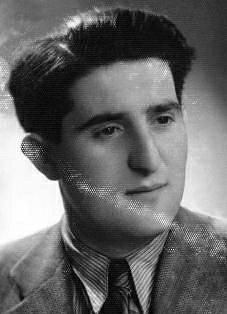
| Abraham Krzepicki, Dawid Nowodworski

Bibliography:
- Cywia Lubetkin, The Holocaust and the Uprising, Jewish Historical Institute IN-B, Book and Knowledge, Warsaw 1999.
- Icchak "Antek" Cukierman, Excess Memory (Those Seven Years). Memories 1939-1946, PWN, Warsaw 2000.
- Ringelblum Archive vol.13, The final stage of displacement is death, prepared by Ewa Wiatr, Barbara Engelking, Alina Skibińska, Jewish Historical Institute, Warsaw 2013.
- Ringelblum Archive vol.17: Warsaw Ghetto Press: Poale Zion Left and Poale Zion Right, ed. E. Bergman, T. Epsztein, M. Wójcicki, Jewish Historical Institute, Warsaw 2016.
- The Ringelblum Archive vol. 26, Literary Works from the Warsaw Ghetto, edited by Agnieszka Żółkiewska, Marek Tuszewicki, Jewish Historical Institute, Warsaw 2017, Texts by Jehoszua Perle "Zagłada Warszawy" and "4580" translated by Karolina Szymaniak.
- Abraham Levin, Diary from the Warsaw Ghetto, Bulletin of the Jewish Historical Institute, April–June 1957, No. 22.
- Emanuel Rignelblum, Chronicle of the Warsaw Ghetto. September 1939 – January 1943, Reader, Warsaw 1983.
- Ruta Sakowska, "Two Stages. Hitler's Policy of Extermination of Jews in the Eyes of the Victims. Historical Sketch and Documents." Ossolineum, Warsaw 1986.
- Yitzhak Arad, Death camps of Operation Reinhardt. Bełżec, Sobibór, Treblinka, translated by Iwona Mączka, Dara Kuczyńska-Szymala, Witold Pilecki Institute of Solidarity and Courage, Warsaw 2021.
- Abraham Jakub Krzepicki, A man escaped from Treblinka… Conversations with a returnee, prepared by Barbara Engelking, Alina Skibińska, Jewish Historical Institute, Warsaw 2017.
- Barbara Engelking, Jacek Leociak, The Warsaw Ghetto: A Guide to a Lost City, 2nd edition, Warsaw 2013.
- Maria Ferenc, "Everyone asks what will become of us." Residents of the Warsaw Ghetto respond to news of the war and the Holocaust., Jewish Historical Institute, Warsaw 2021.
